
Audit Overview
Your store's untapped revenue potential — and how to unlock it
Why We Created This Audit
We analyzed https://www.urbanmonkey.com/ the same way we've audited 350+ e-commerce stores — looking for the specific gaps between your current experience and what top-performing Fashion stores deliver. Every finding in this report is a revenue opportunity backed by industry data and competitive benchmarks.
What We Analyzed
- UX & Conversion Design12 findings
- Technology & App StackPlatform + 6 apps
- Industry BenchmarksFashion
Pages Analyzed
- Homepage3 findings
- Collection Pages2 findings
- Product Pages (PDP)5 findings
- Cart & Checkout2 findings
 This audit was prepared by Growisto — a CRO-led Website development team behind 167% conversion growth for Atomberg, 46% CR lift for TyresNmore, and 350+ e-commerce projects.
UX & Conversion Findings
Page-by-page analysis with visual comparisons against top Fashion stores
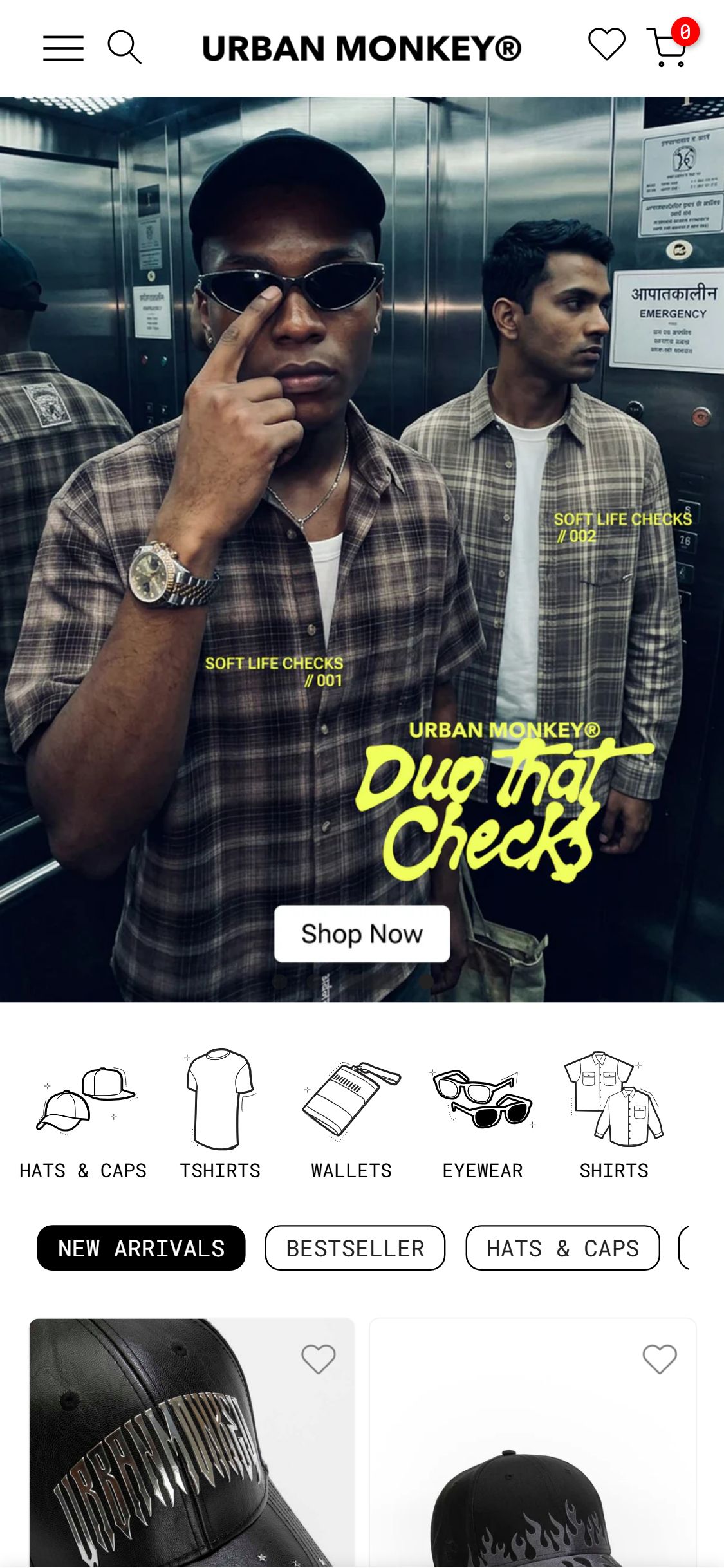
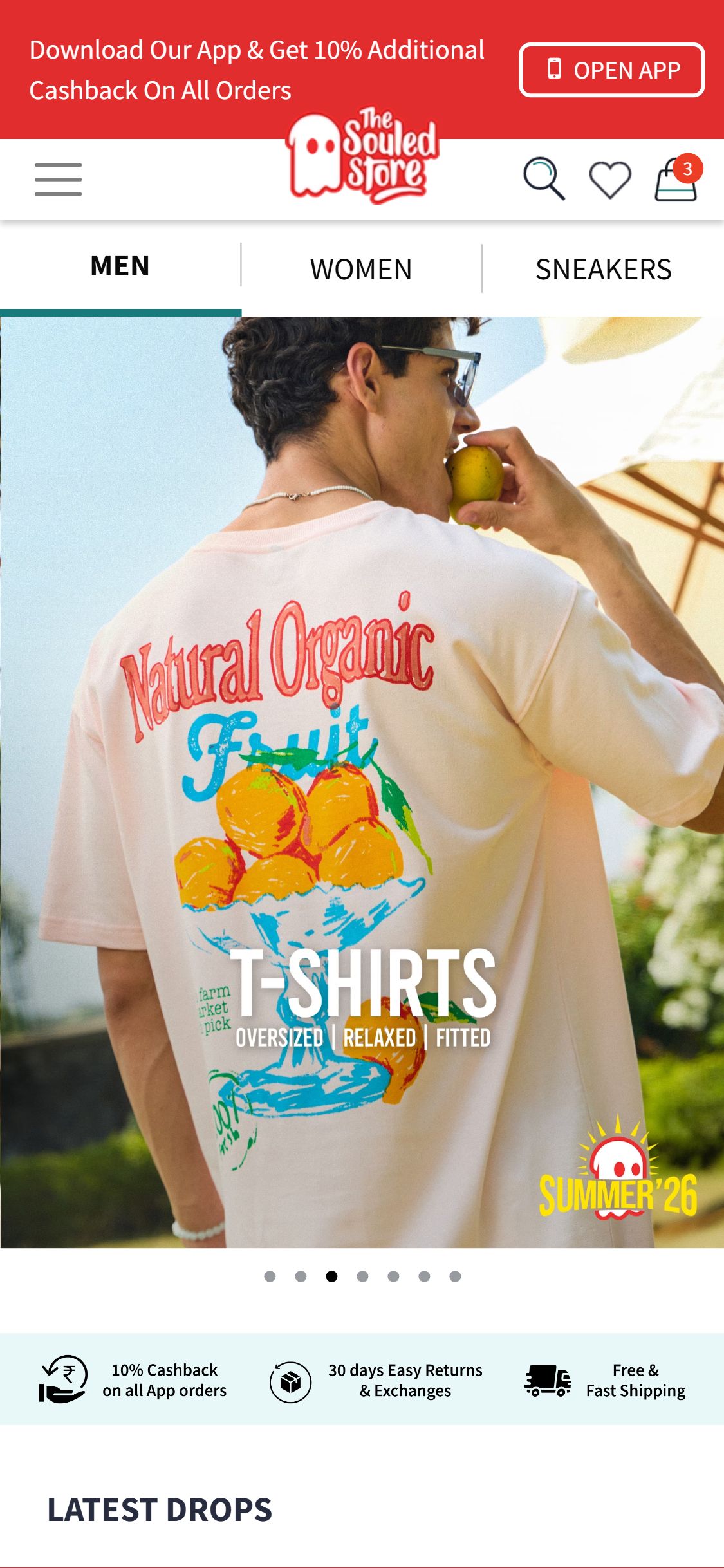
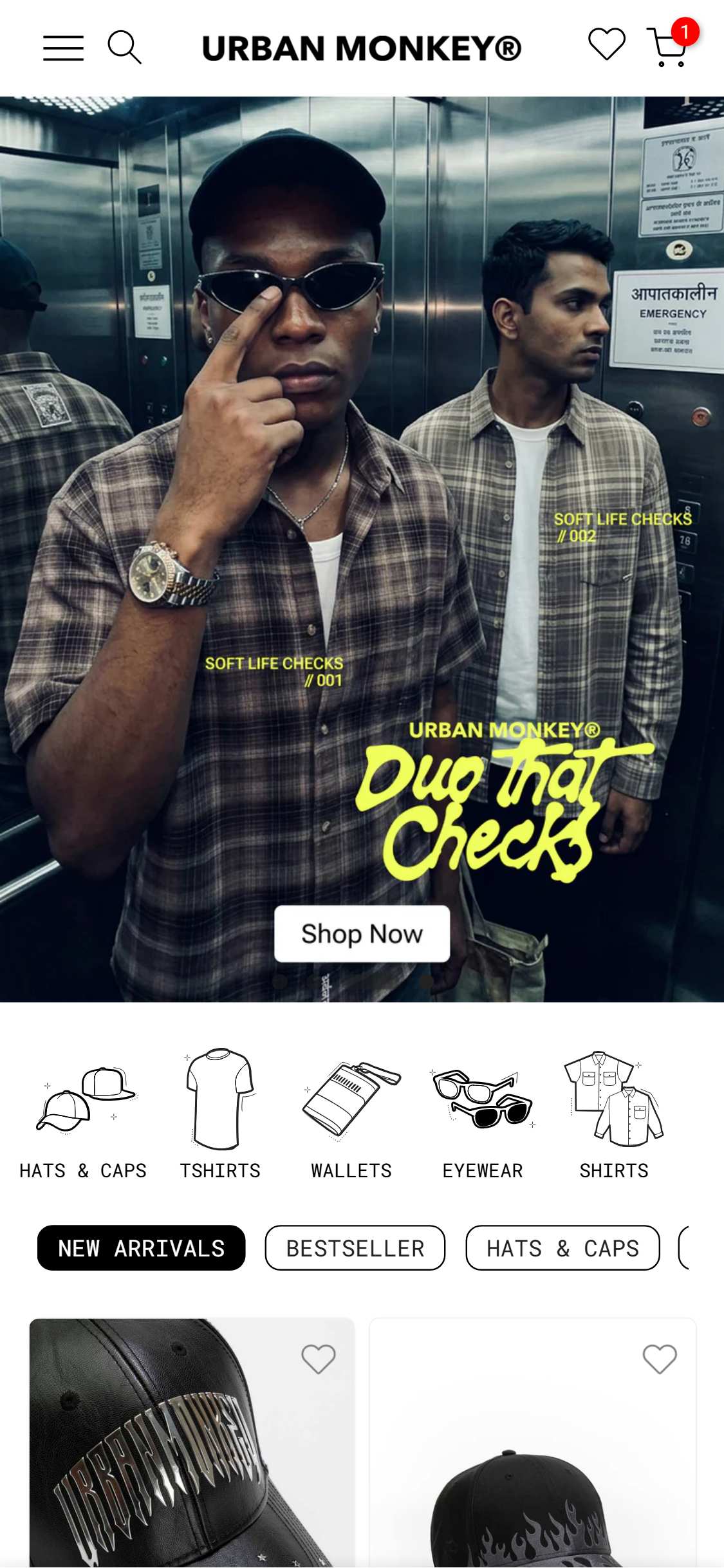
- The Urban Monkey homepage hero section does not display a persistent announcement bar or trust strip communicating free shipping threshold, return policy, or COD availability — confirmed in hp_f1_client.jpeg.
- First-time Indian streetwear shoppers evaluating a new brand need to know within the first viewport whether the brand offers COD (significant trust signal for non-metro customers), free shipping threshold, and hassle-free returns.
- Indian DTC benchmark: 8/10 top Indian apparel brands (The Souled Store, Bewakoof, Snitch) maintain a persistent announcement/trust bar at the very top of every page — the pattern is a category expectation, not a differentiator.
- Urban Monkey's brand aesthetics are strong but trust-signal omissions at the discovery stage increase bounce probability among price-sensitive or first-time buyers who cannot quickly determine if the shopping experience is risk-free.
- Add a sticky announcement bar at the top of the page (above the navigation) with a rotating set of trust signals: 'Free Shipping on orders above ₹X | Easy 15-day returns | COD available | Pan-India delivery'.
- Use a contrasting background color for the announcement bar (brand color or dark/black) to ensure it reads clearly above the main navigation — the bar should persist as users scroll.
- Ensure the bar is present across all page types (homepage, collection, PDP, cart) — trust signals should not disappear after the visitor has moved past the homepage.
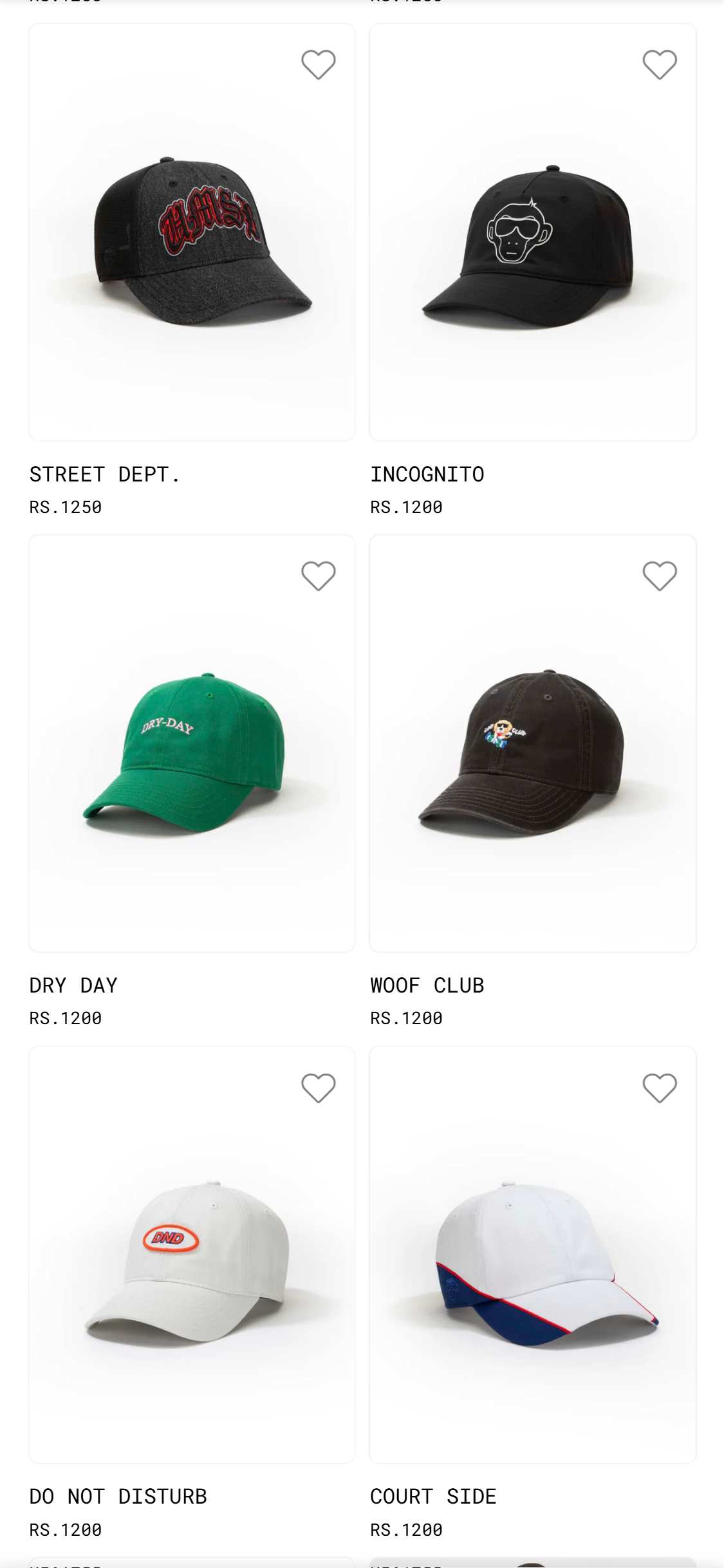
- Urban Monkey homepage product cards display the product name, price, and color swatches but do not surface any star rating or review count — confirmed in hp_f2_product_cards_client.jpeg.
- Product reviews exist on Urban Monkey PDPs — the aggregate rating data is generated but is not being rendered at the collection card level where purchase comparisons are first made.
- Growing benchmark: 7/10 top Indian fashion brands (The Souled Store, Snitch, Bewakoof) show star ratings on homepage and collection product cards — the pattern has become a buyer expectation in the Indian DTC segment.
- For a brand selling premium-priced caps (₹500–₹2500+), social proof on cards is especially critical — buyers who cannot quickly validate quality during browsing require additional convincing at the PDP stage, increasing drop-off.
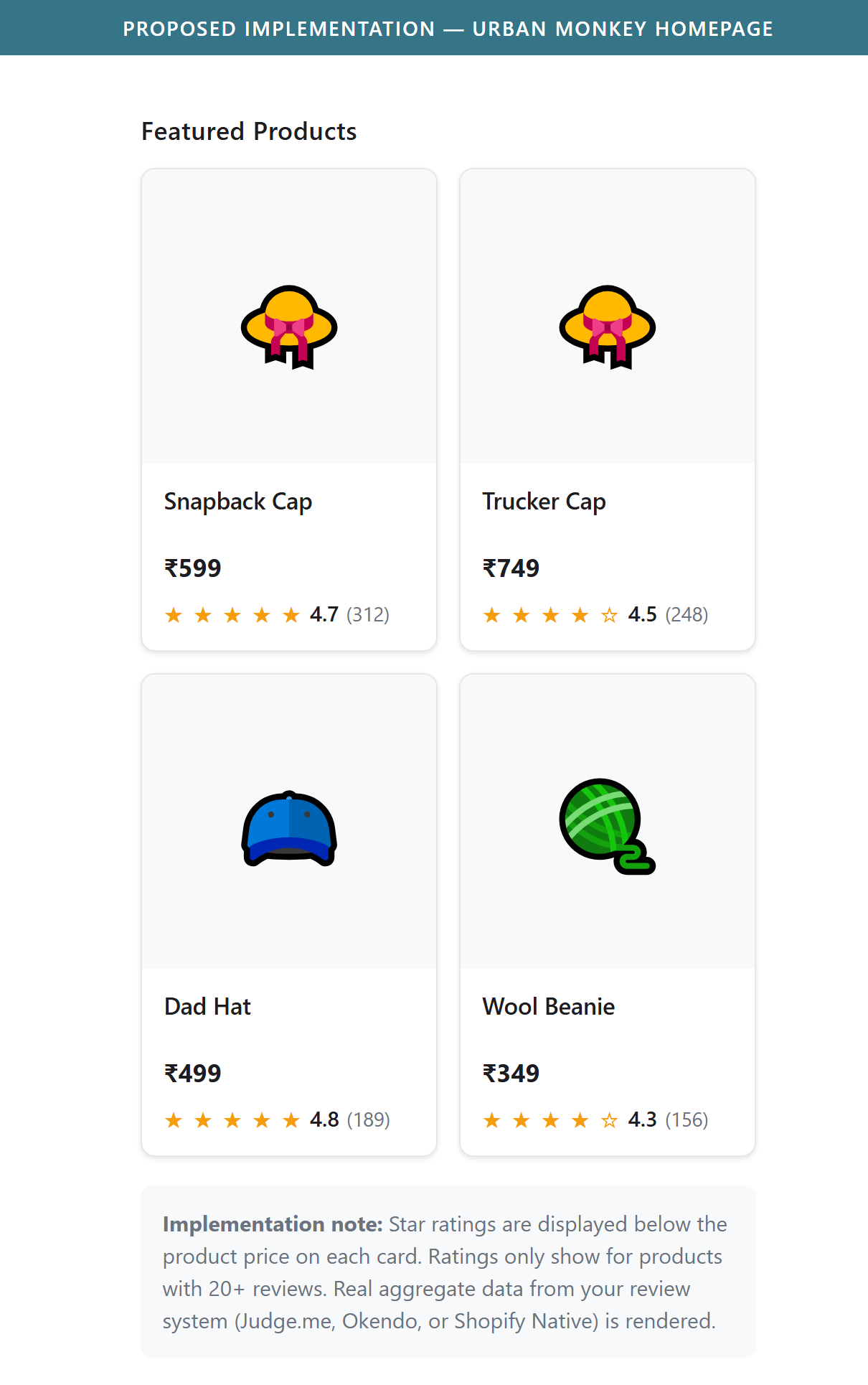
- Enable star rating display on homepage and collection product cards — show aggregate star rating (e.g., ★ 4.7) and review count (e.g., (312)) below the product price on each card.
- Configure the review app (Judge.me, Okendo, or native Shopify Reviews) to inject card-level ratings — most major review apps for Shopify support collection card injection via theme snippet or metafield.
- Prioritize surfacing ratings on products with 20+ reviews where the social proof signal is meaningful — new products with fewer than 5 reviews should hide the rating display to avoid low-rating visibility.
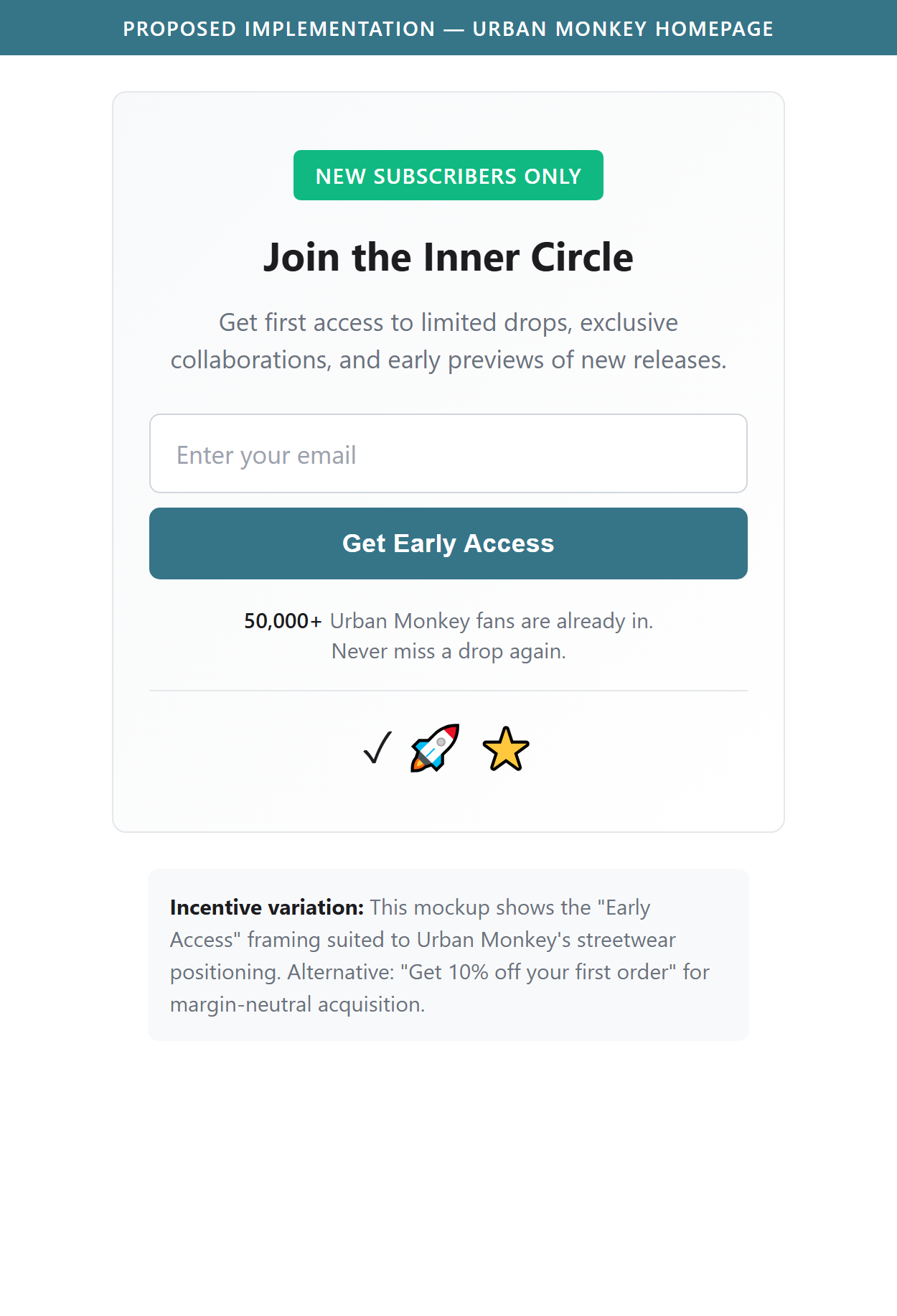
- Urban Monkey's homepage email capture section shows a sign-up form but does not prominently display a tangible incentive — no discount percentage, no early access promise, and no exclusive benefit is visible in the captured screenshot.
- Email subscribers represent the highest-LTV customer segment for DTC apparel brands — the capture form is a critical LTV investment point that should maximize sign-up conversion with an explicit value exchange.
- Growing Indian DTC benchmark: 6/10 top stores offer a first-order discount (10–15% off) or exclusive access (early drops, new arrivals) in exchange for email subscription — these offers significantly outperform generic 'stay updated' prompts.
- Urban Monkey's streetwear positioning around limited edition caps and collaborations makes an 'early access to drops' incentive especially compelling — this aligns with the brand's collector culture without requiring a discount that erodes margin.
- Reframe the email capture CTA around a concrete benefit: 'Get 10% off your first order — join the tribe' or 'Be first to know about drops — sign up for early access'.
- For a streetwear brand, an early access / exclusive drops framing is more brand-consistent than a discount CTA — 'Join the Inner Circle — first access to new caps and collaborations' aligns with Urban Monkey's community positioning.
- Add a social proof line below the CTA: 'Join 50,000+ fans who never miss a drop' — the number creates urgency and validates that sign-up is worth the effort.
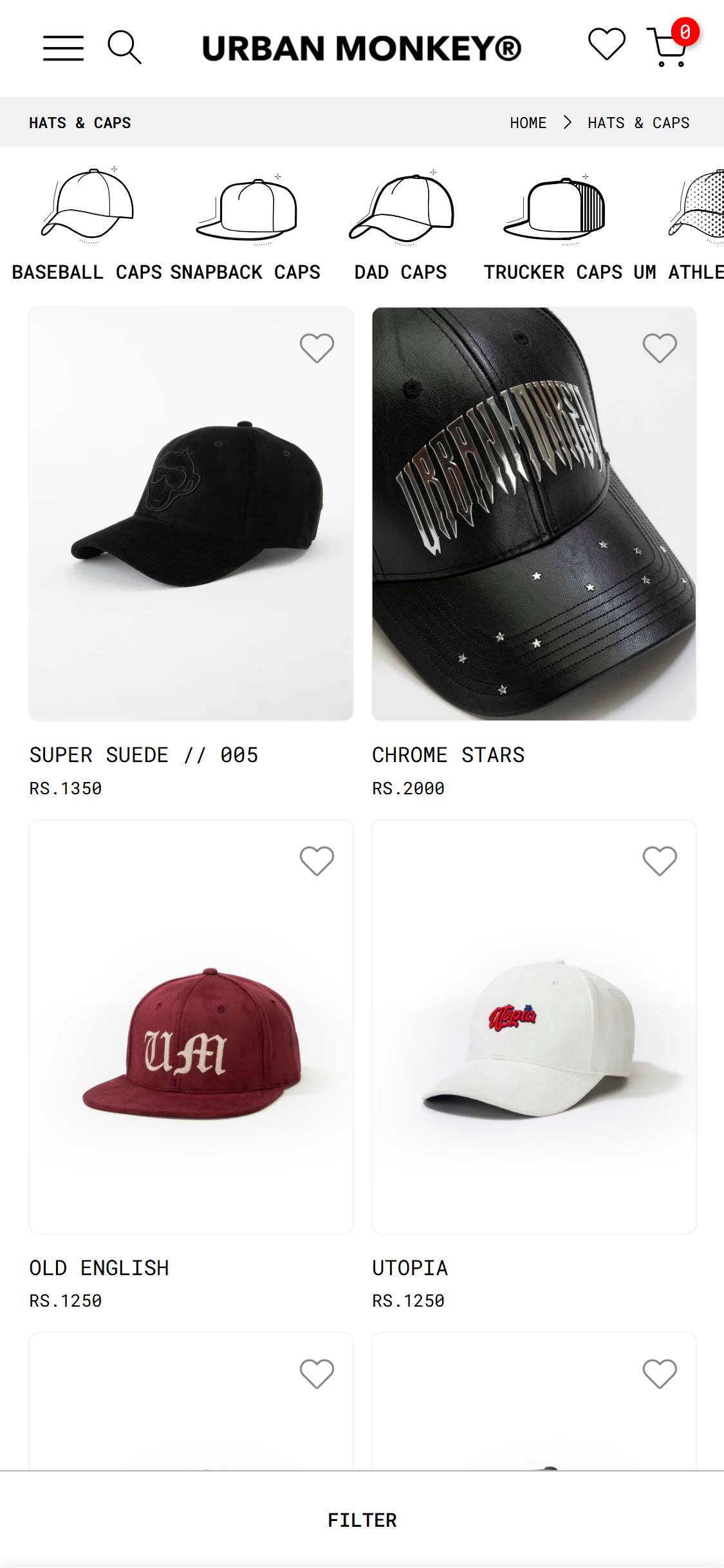
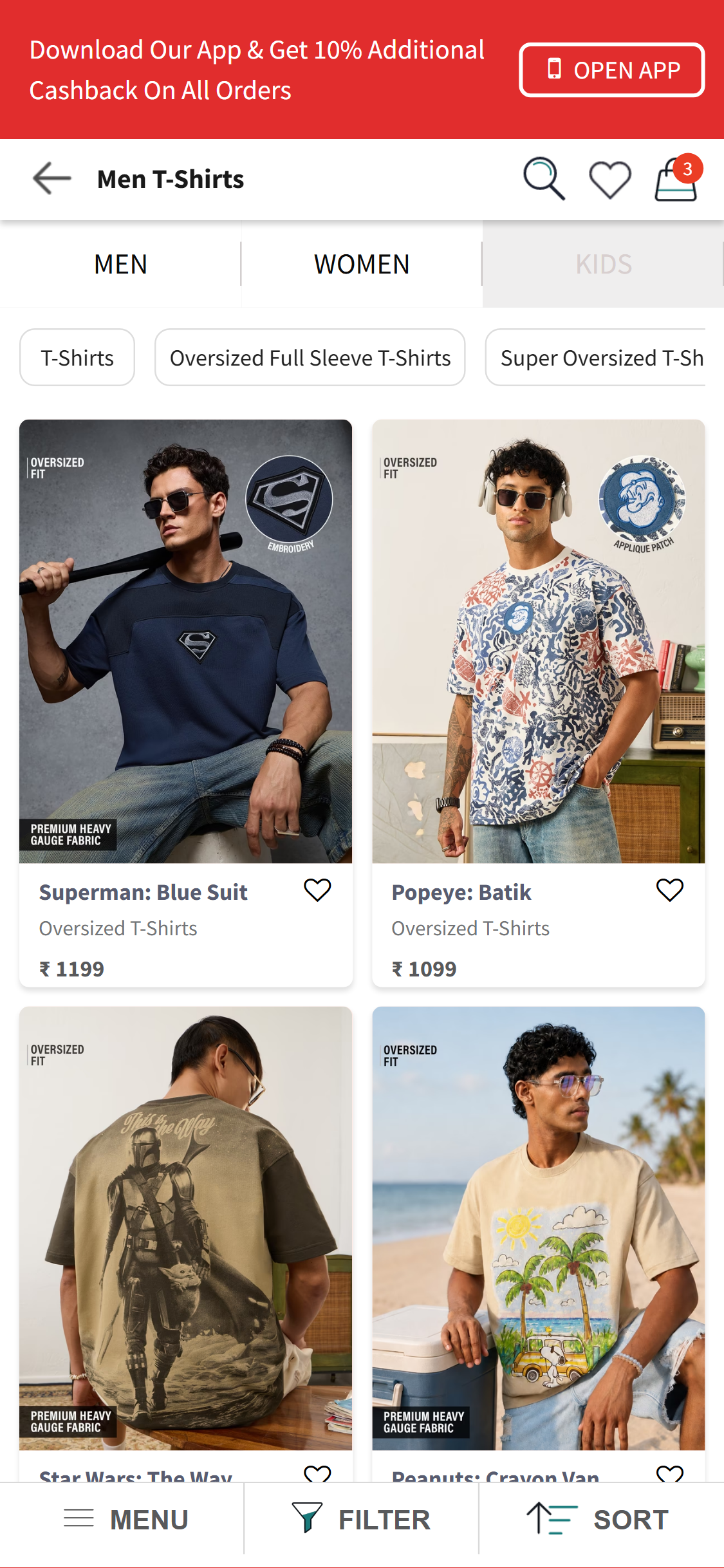
- Urban Monkey's collection page displays a product grid with no filter sidebar, no filter dropdown, and no sort controls — confirmed in col_f1_client.jpeg.
- With a catalog spanning multiple cap styles (snapback, fitted, trucker, dad hat), colors, and price points, Urban Monkey's collection has meaningful filter axes that are entirely unexploited.
- For a headwear brand, size filtering is especially critical — a customer who wears a fitted cap needs to filter to fitted styles immediately rather than examining each product card individually.
- Shopify's native OS 2.0 faceted filtering supports Size, Color, Price, and custom product-type facets — this capability is available at zero additional app cost and can be enabled via theme settings.
- Enable Shopify's native collection filtering with at minimum four filter axes: Style (Snapback, Fitted, Trucker, Dad Hat, Beanie), Color, Price Range, and New Arrivals / Sale toggle.
- Add a Sort dropdown above the product grid: Best Selling, Newest, Price Low to High, Price High to Low — these four options satisfy 90% of sorting intent with minimal implementation effort.
- Display active filter chips above the product grid so users can see and clear their active filters without scrolling back to the sidebar — this is especially important on mobile where the filter panel collapses.
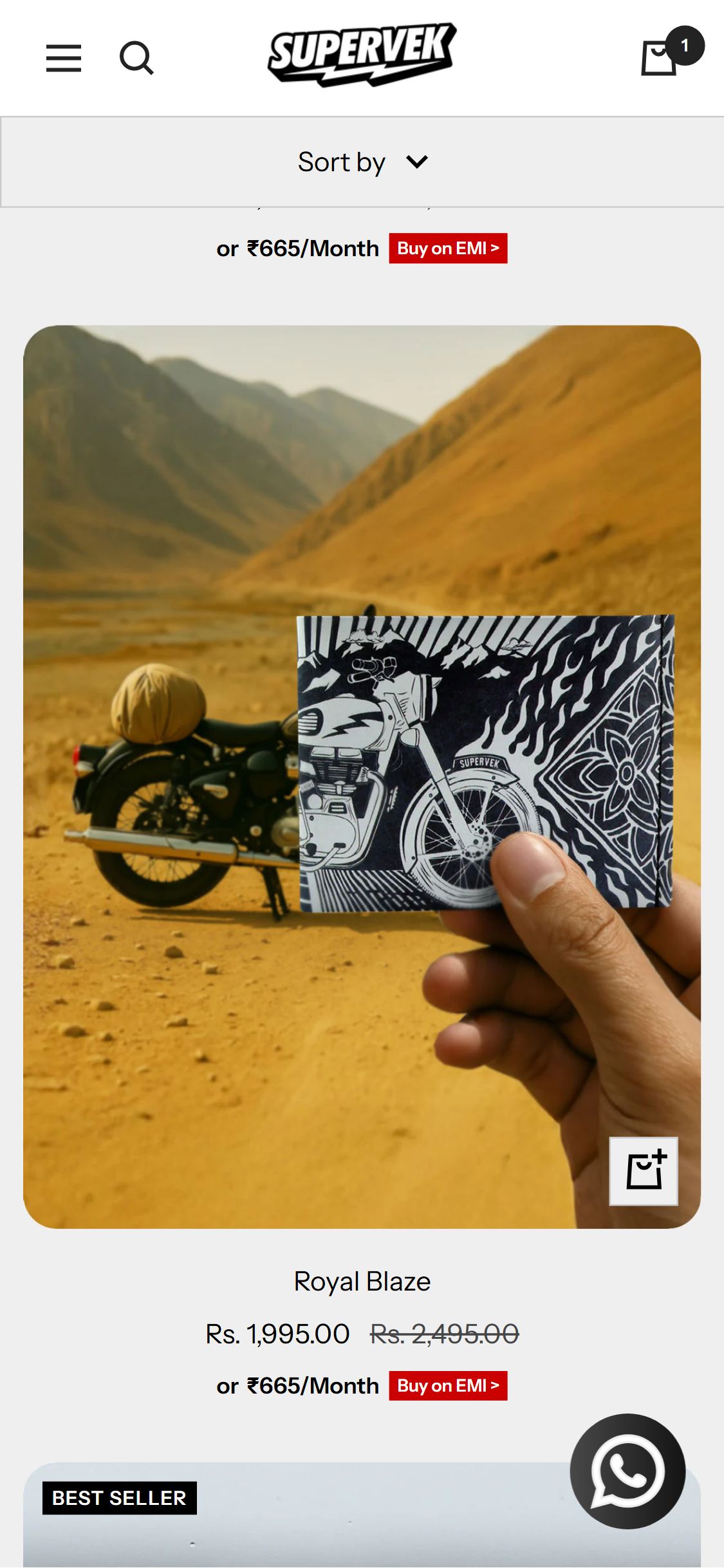
- Urban Monkey collection product cards display product image, name, and price but carry no product status badges — no 'New', 'Best Seller', 'Limited Edition', 'Low Stock', or 'Sold Out' labels are visible in the collection screenshot.
- For a streetwear brand where limited edition drops and sell-outs are core to the brand's appeal, the absence of urgency badges is a direct missed conversion opportunity — 'Limited Edition' and 'Only 3 Left' labels are especially powerful in the cap/streetwear category.
- Standard benchmark: 8/10 top Indian fashion brands use product badges on collection cards — Bewakoof, The Souled Store, and Snitch all surface 'NEW', 'SALE', and 'SOLD OUT' states on every relevant card.
- A 'Sold Out' overlay with no restock CTA on sold-out products is also a missed email/WhatsApp capture opportunity — back-in-stock notification sign-ups are a standard cart recovery mechanism for streetwear brands.
- Implement a product badge system on collection cards with at minimum four states: 'New' (for arrivals within the last 30 days), 'Best Seller' (manual or algorithmic based on sales rank), 'Limited Edition' (via product tag), and 'Sold Out' (automatic when all variants are out of stock).
- For sold-out products, show the Sold Out overlay but keep the card visible and clickable — link to a 'Notify Me' back-in-stock sign-up on the PDP using a back-in-stock app (Back in Stock by Swym, or native Shopify).
- Use color and position consistently for badges: top-left corner for status badges (New, Sale, Limited) and a full overlay for Sold Out — this creates visual consistency that buyers learn to scan for quickly.
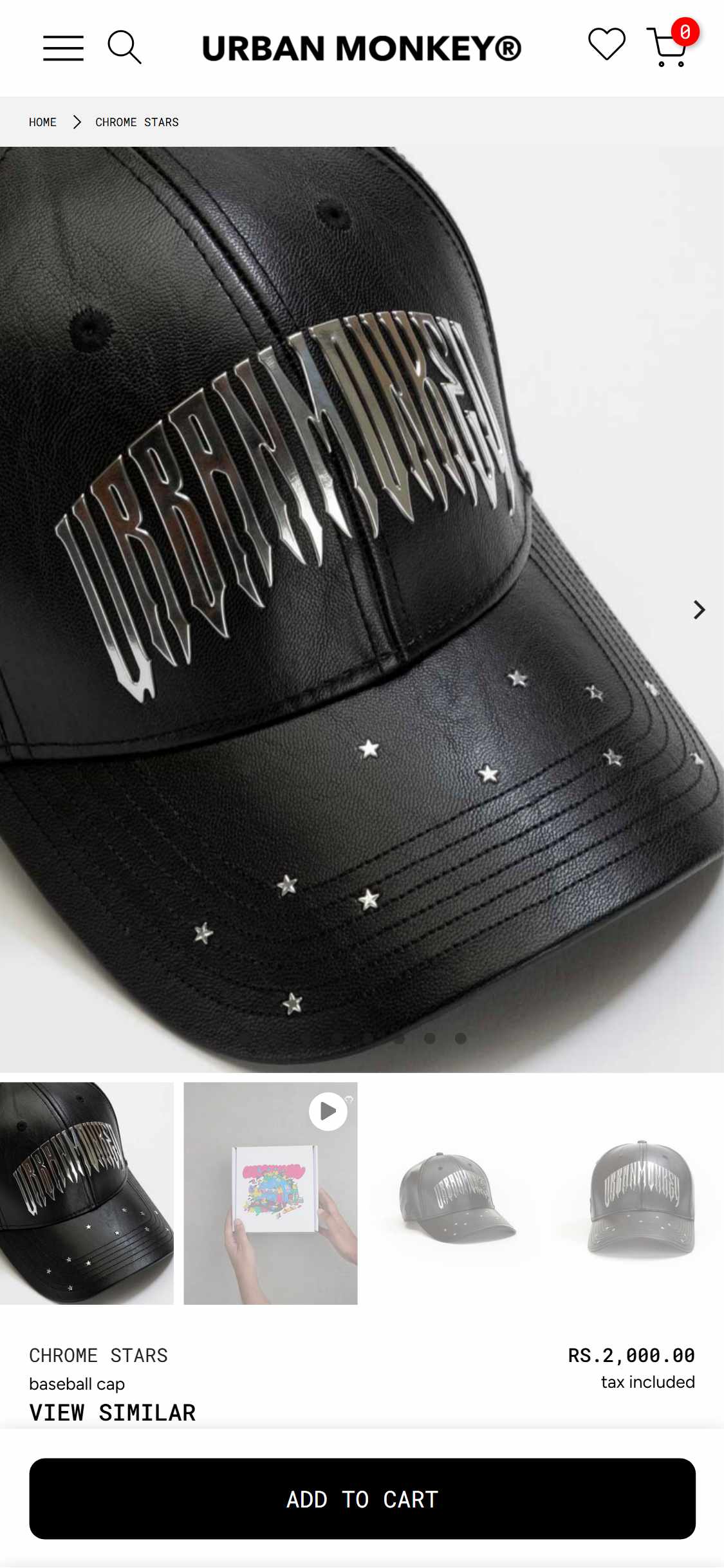
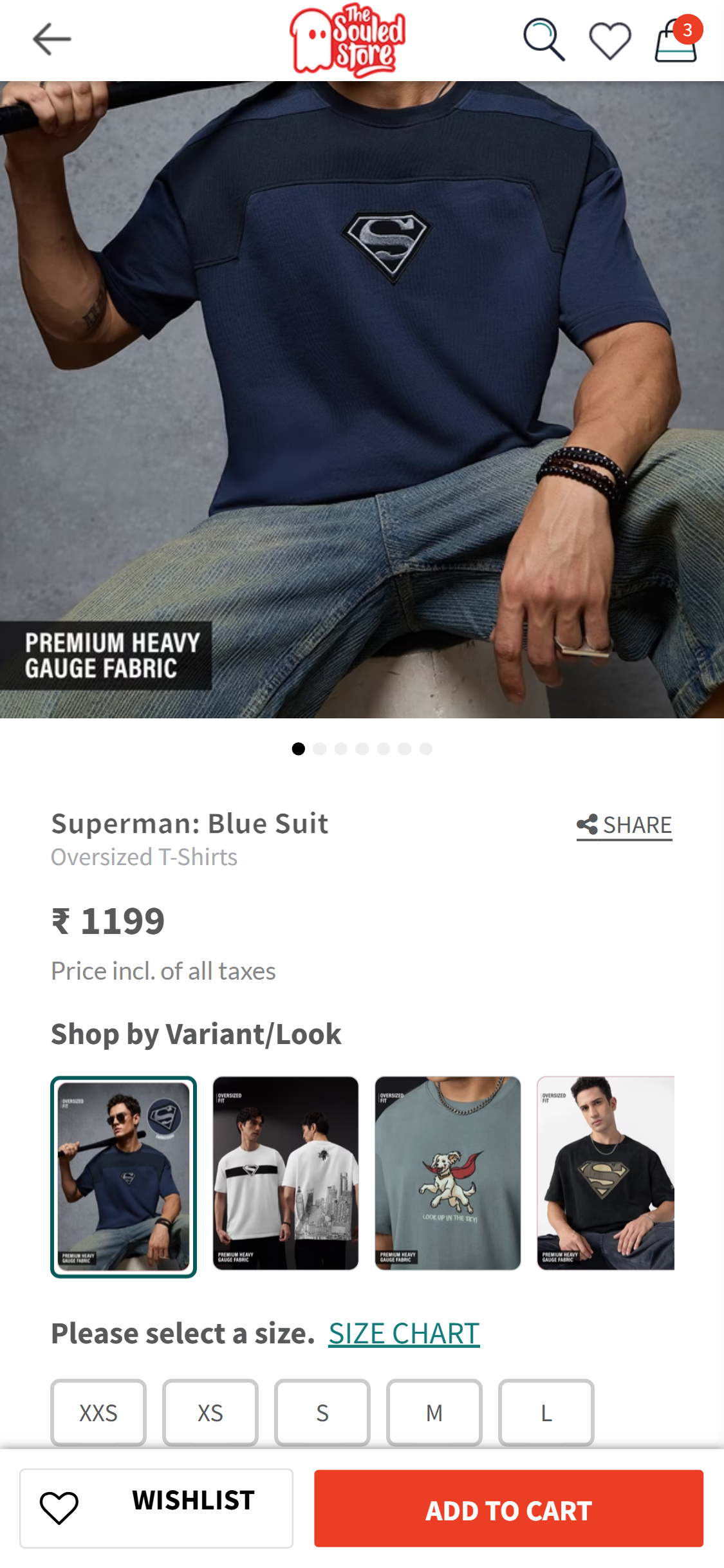
- Urban Monkey's PDP size/variant selector area does not show a clearly visible and prominently placed size guide link directly next to or beneath the size selector — confirmed in pdp_f1_client.jpeg.
- For headwear specifically, sizing uncertainty is a primary purchase barrier — head circumference sizing (S/M/L or cm-based) is unfamiliar to most buyers who are accustomed to cap sizing without a specific measurement reference.
- The absence of an in-context size guide creates a friction point that increases cart abandonment (buyer leaves to search for size info externally) or purchase regret and returns (buyer guesses incorrectly).
- Indian DTC benchmark: all 9/10 top fashion stores surface a size guide link immediately adjacent to the size selector — the link typically opens a modal with a measurement chart and a 'How to measure' illustrated guide.
- Add a 'Size Guide' hyperlink (or small ruler icon + text) directly to the right of or immediately below the size selector label — this single change eliminates the primary variant-selection friction for first-time buyers.
- The size guide should open as a modal overlay (not a new page) to preserve the buyer's PDP context — the modal should include a head circumference measurement chart in both cm and inches, and a simple illustrated guide showing where to measure.
- Consider adding a 'Not sure of your size?' helper text below the size selector that routes to the size guide — this secondary CTA catches buyers who miss the link but are explicitly experiencing size uncertainty.
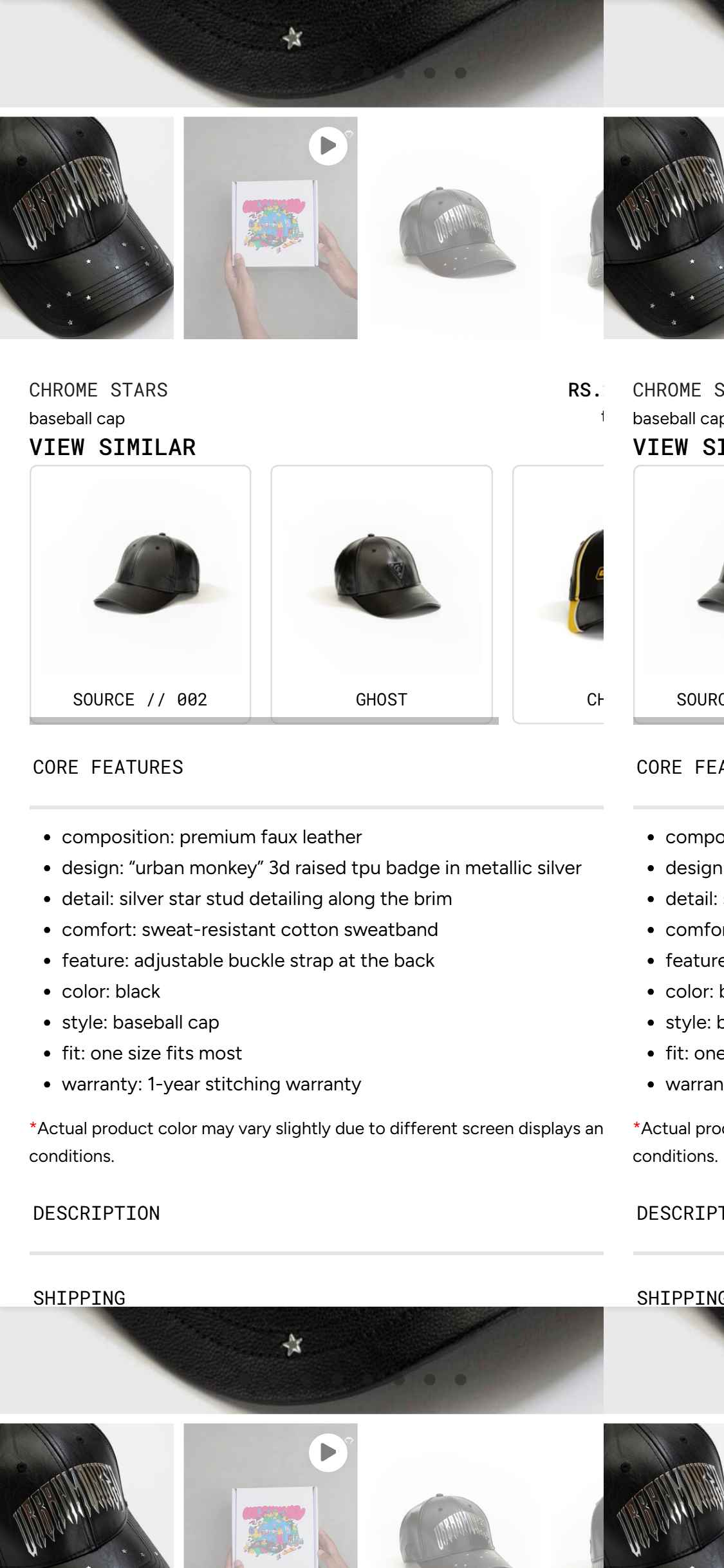
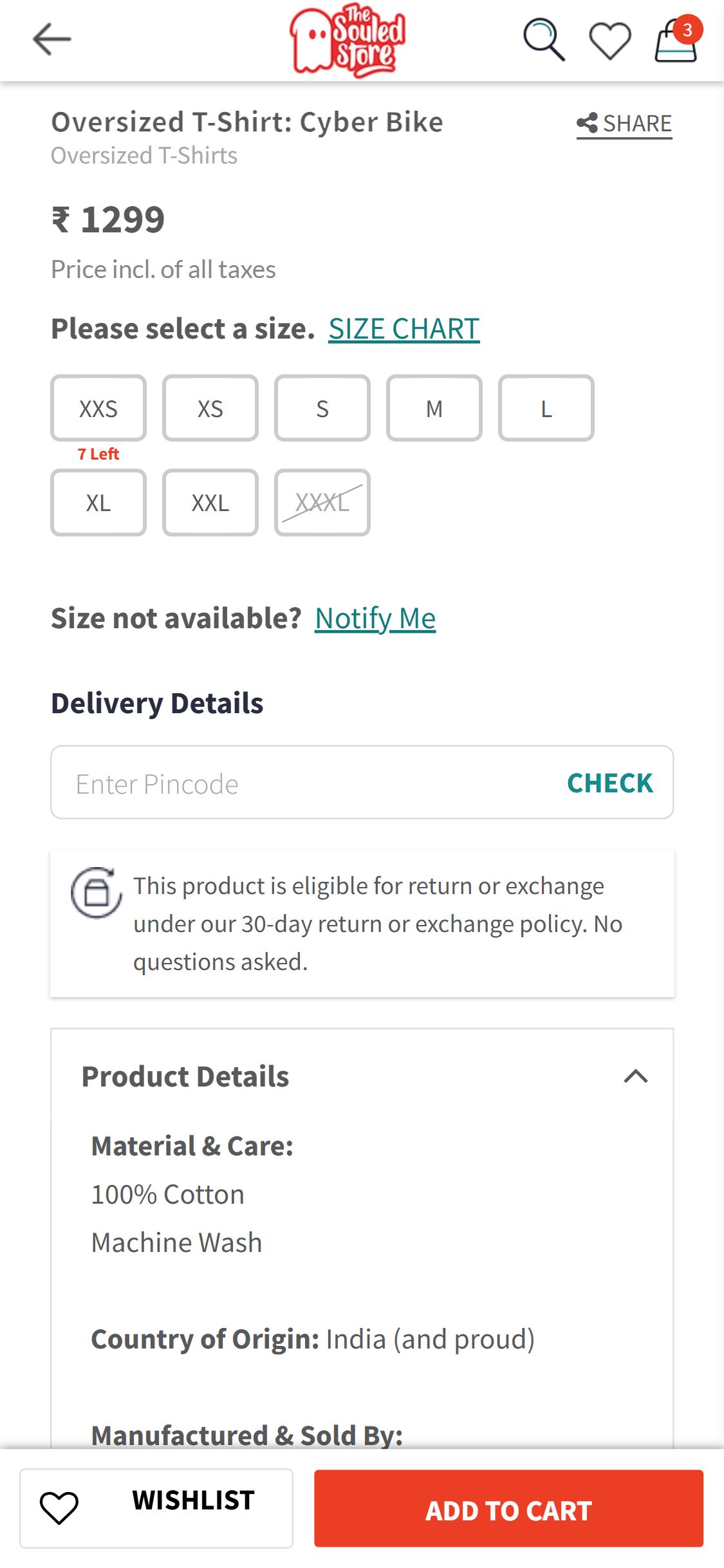
- Urban Monkey's PDP Add to Cart zone does not include a pincode-based delivery estimate or a delivery timeline indicator — confirmed in pdp_f2_client.jpeg.
- For Indian e-commerce buyers, delivery date visibility is a critical pre-purchase signal — buyers who are purchasing for a specific occasion (birthday gift, event) or are comparing delivery speeds across brands will not commit without a delivery estimate.
- Indian DTC benchmark: 8/10 top stores including The Souled Store, Bewakoof, and Myntra display a pincode checker on PDPs that returns the expected delivery date within 2–3 seconds — this is a category standard expectation.
- The absence of a delivery estimate also suppresses COD conversion — buyers who want to pay on delivery need confidence that the package will arrive before committing to a COD order, which requires knowing the delivery window upfront.
- Add a pincode delivery estimator to the PDP between the ATC button and the shipping/returns policy section — a simple input field ('Enter pincode') that returns 'Estimated delivery: [date range]' is sufficient.
- Implement using a Shopify app (Delivery Date Pincode Checker, or similar) or a lightweight custom implementation that queries a courier partner API — most major Indian logistics partners (Shiprocket, Delhivery, Bluedart) provide pincode-based ETA APIs.
- Pre-populate the pincode field from browser geolocation or previous session data (if available) to reduce friction — returning customers should see their delivery estimate immediately without re-entering their pincode.
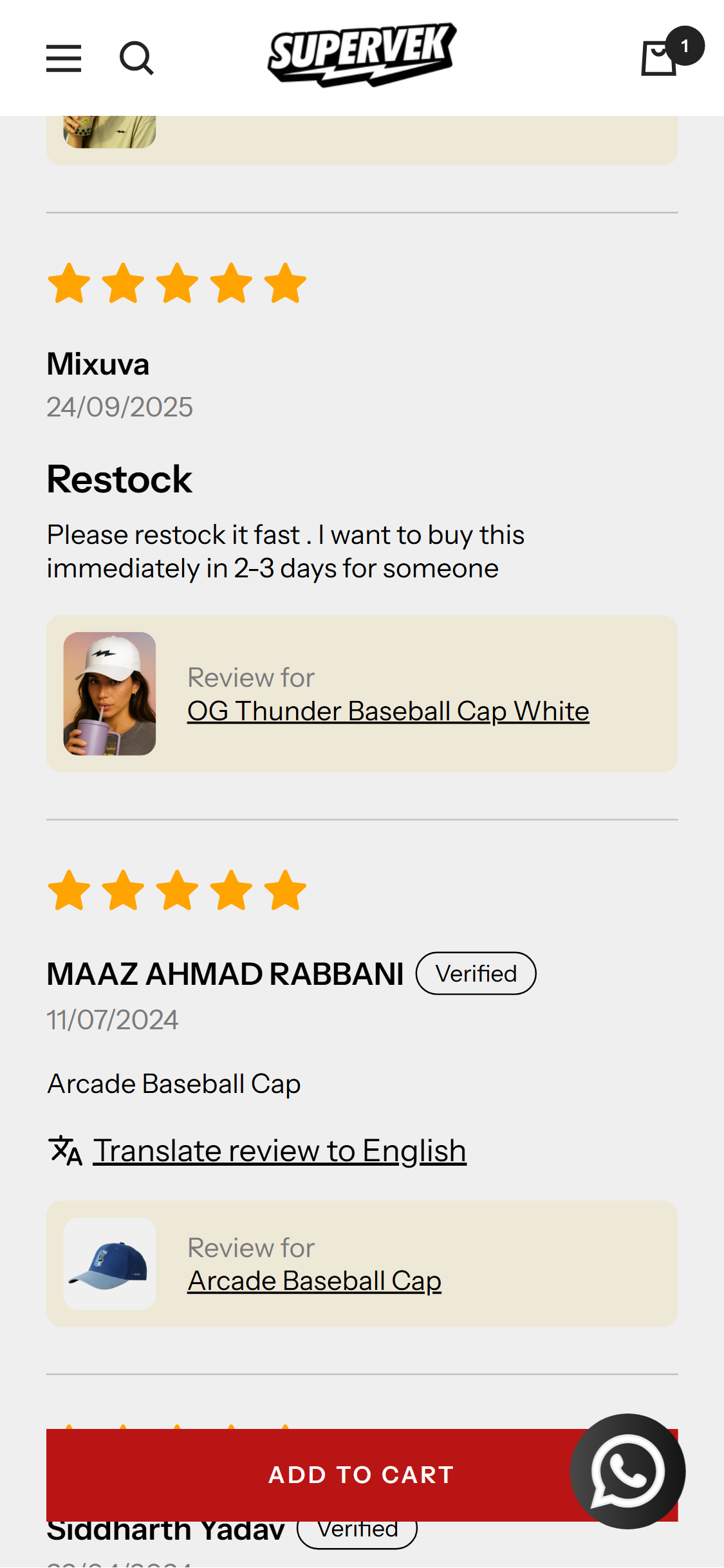
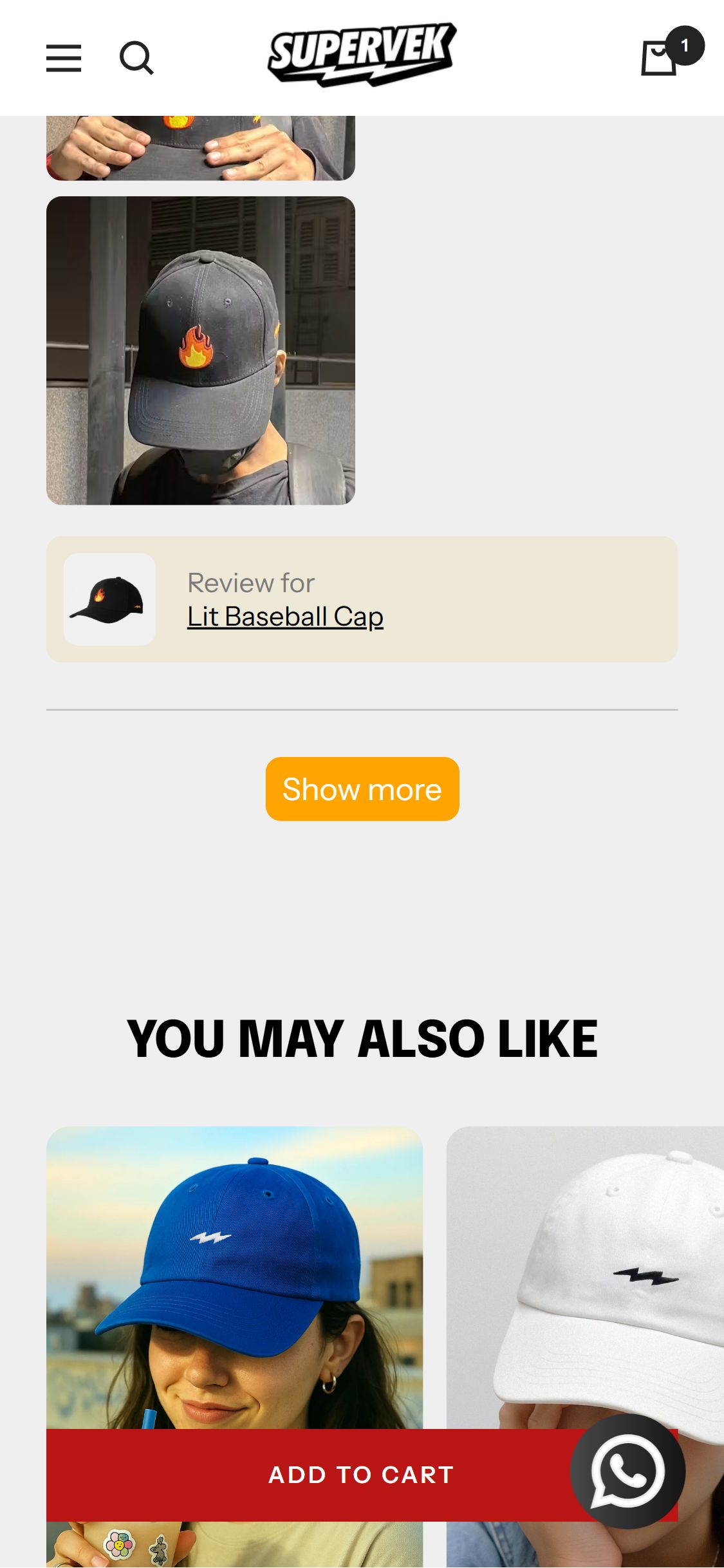
- Urban Monkey's PDP review section shows text-based customer reviews but does not prominently feature customer-uploaded photos alongside the review content — confirmed in pdp_f3_reviews_client.jpeg.
- For a headwear brand, customer photos showing how a cap looks when worn (fit, style, color accuracy) are the single most valuable review content — they directly address the primary pre-purchase uncertainty for headwear buyers.
- Growing benchmark: 7/10 top Indian fashion brands (The Souled Store, Bewakoof, Fashor) display photo reviews natively in the review section — photo reviews convert at 3–5x the rate of text-only reviews for fashion products.
- Review sort and filter controls (Most Helpful, Most Recent, filter by star rating) are also absent or not prominently visible — buyers who want to quickly find critical feedback or the most recent reviews cannot easily do so.
- Enable customer photo upload in the review collection flow — post-purchase email/WhatsApp sequences should explicitly invite customers to share a photo of their cap being worn, with an incentive (store credit, loyalty points) for photo submissions.
- Configure the review display to show the photo gallery above the text reviews — a horizontal scrollable row of customer cap photos at the top of the review section is more visually compelling than a text list and immediately demonstrates real-world product appearance.
- Add sort and filter controls to the review section: Sort by (Most Recent, Most Helpful, Highest Rating, Lowest Rating) and Filter by (star rating) — these controls are available in most Shopify review apps (Judge.me, Okendo, Yotpo) via configuration.
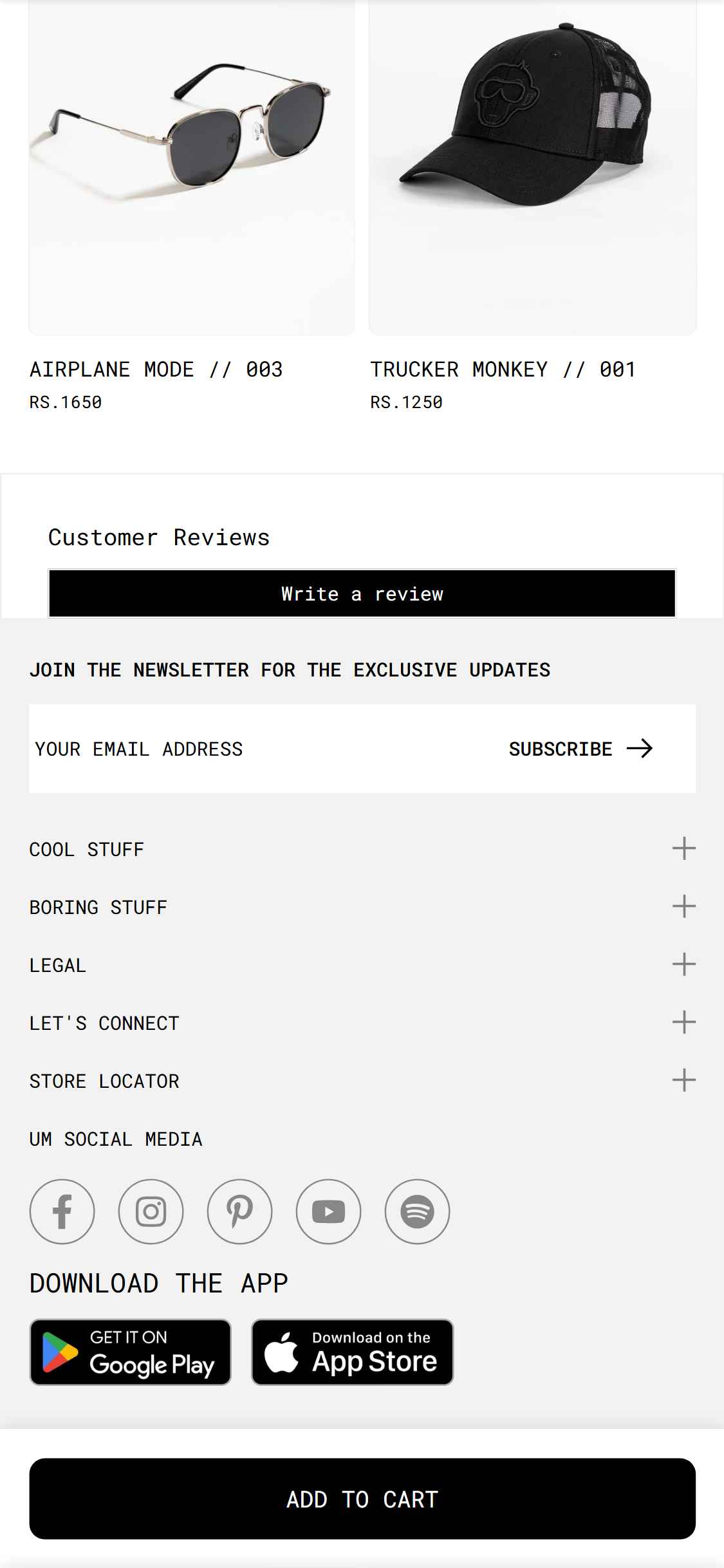
- Urban Monkey's PDP does not include a 'Wear It With', 'Complete the Look', or 'You Might Also Like' section featuring complementary product pairings — the PDP focuses solely on the selected product with no cross-sell pathway.
- Urban Monkey sells caps, apparel, accessories, and eyewear — the catalog has natural streetwear outfit pairing potential (cap + tee + sunglasses) that is entirely unrealized at the PDP level.
- Growing pattern: 5/10 top streetwear/fashion stores now feature outfit pairing on PDPs — this pattern is especially effective for brands with complementary catalog categories (headwear + apparel + accessories).
- Without a cross-sell section on the PDP, a buyer who would have considered adding a t-shirt to their cap order must independently navigate to the apparel section — the discovery friction significantly reduces multi-category purchase rate.
- Add a 'Wear It With' section below the product accordion on the PDP, featuring 2–3 hand-curated complementary products: for a cap PDP, show a t-shirt/hoodie and a pair of sunglasses from the Urban Monkey collection.
- Frame the section around outfit completion rather than generic recommendations: 'Complete the look — pair with' is more compelling than 'You might also like' because it tells the buyer how the products relate.
- Allow add-to-cart directly from the pairing cards (without requiring a PDP visit for each complementary item) to reduce the click depth required for multi-product purchases.
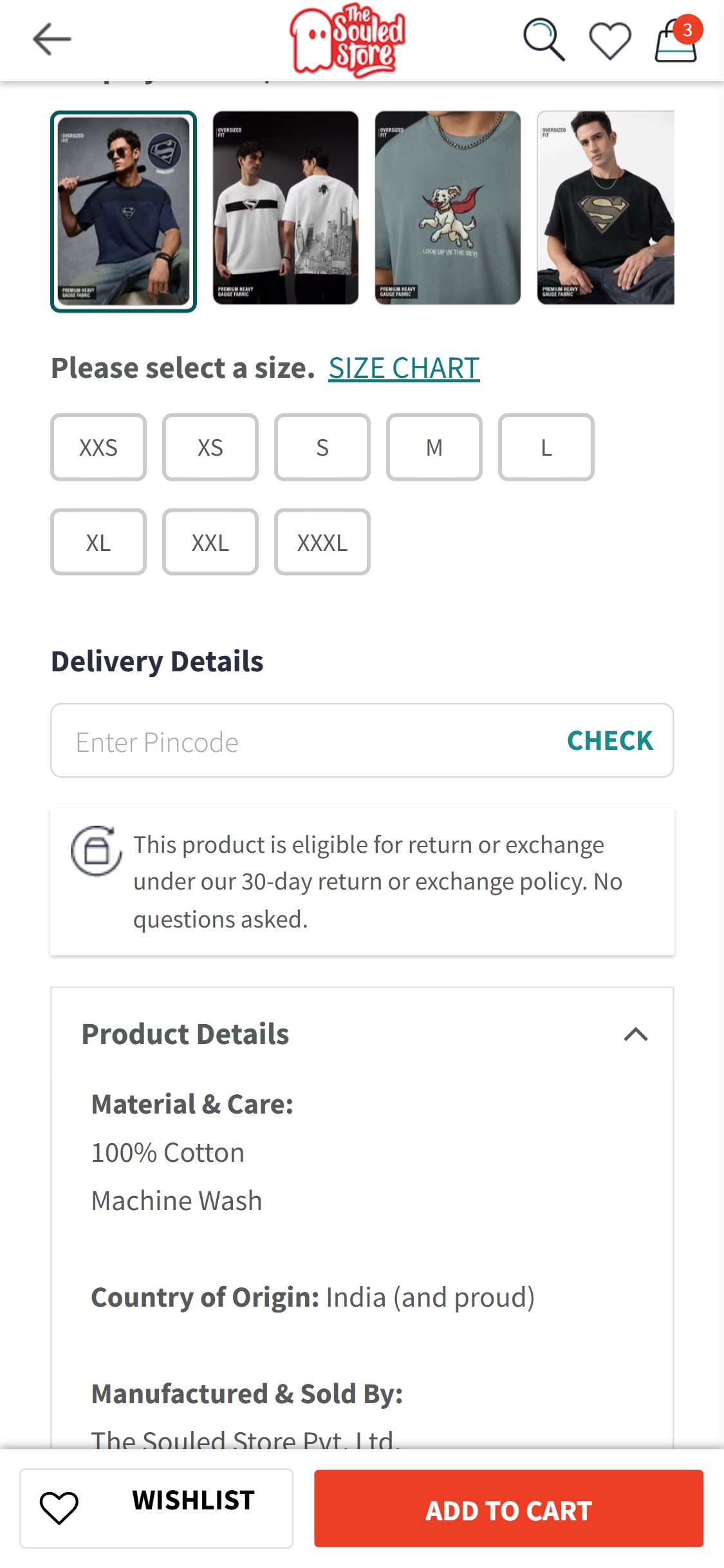
- Urban Monkey's mobile PDP shows the Add to Cart button near the product images and title but does not have a sticky ATC element that persists as users scroll through the product description, reviews, and details.
- Mobile shoppers on Indian networks frequently read product descriptions and reviews carefully before committing — if the ATC button is not accessible after a scroll, the friction of scrolling back is a measurable conversion barrier.
- Standard benchmark: 8/10 top Indian mobile commerce sites (The Souled Store, Myntra, Nykaa Fashion) feature a sticky bottom bar with an ATC button that is always accessible regardless of scroll depth.
- Sticky ATC implementation on Shopify mobile PDPs is a standard theme feature — most modern Shopify OS 2.0 themes support this as a theme setting toggle requiring no additional development.
- Enable the sticky Add to Cart bar on mobile — show a compact bar at the bottom of the mobile viewport containing the product name (truncated), the price, and an Add to Cart button.
- The sticky bar should appear only after the user has scrolled past the primary ATC button to avoid redundancy — trigger the sticky bar appearance after the main ATC button scrolls out of the viewport.
- Ensure the sticky bar respects the selected variant — if the user has selected a size and color, the sticky ATC button should add that specific variant to cart, not prompt re-selection.
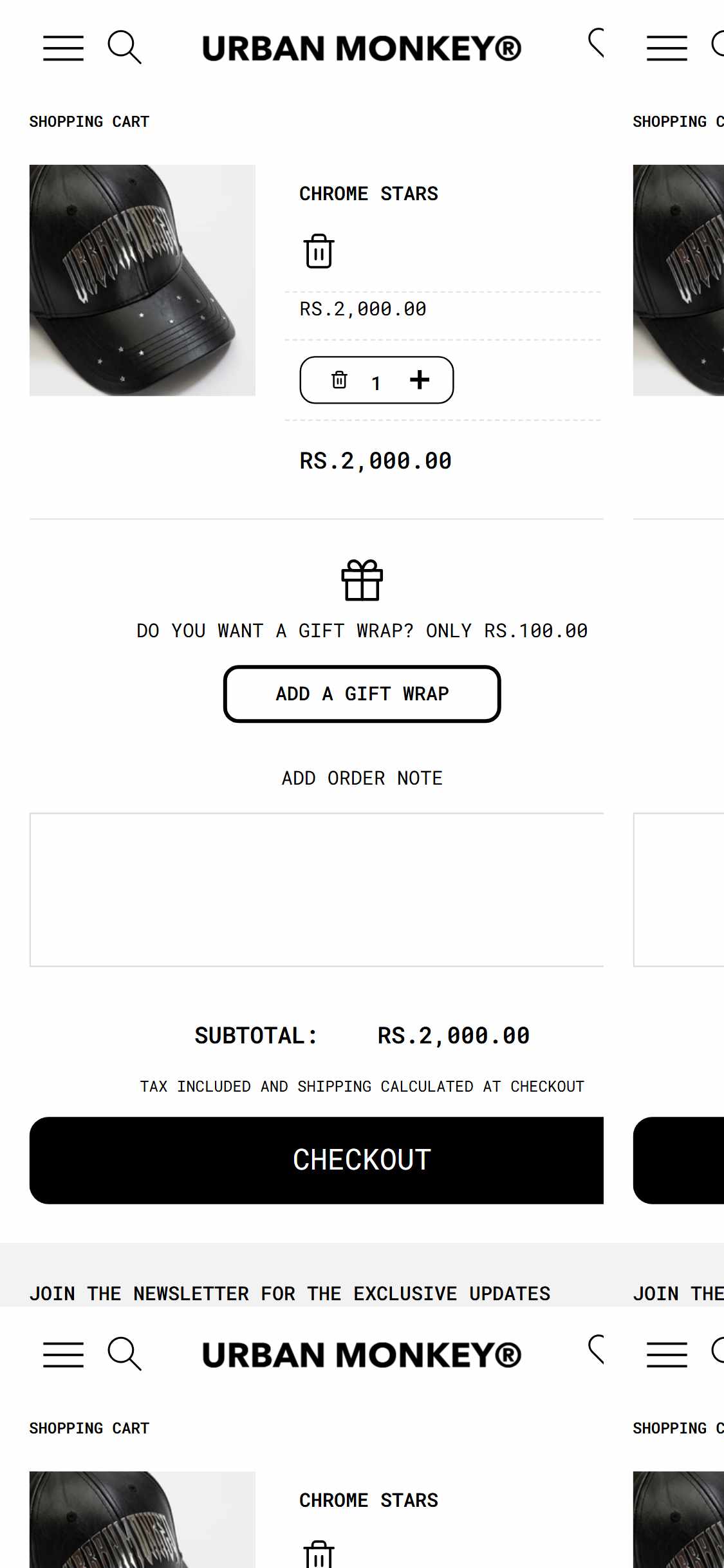
- Urban Monkey's cart page shows the cart item list, subtotal, and checkout button but does not display a free shipping progress bar or threshold messaging — confirmed in cart_f1_client.jpeg.
- Urban Monkey offers free shipping on qualifying orders — this threshold exists but is not dynamically communicated in the cart based on the current cart value, meaning buyers near the threshold are not prompted to add another item.
- Standard Indian e-commerce benchmark: 7/10 top Indian stores display a free shipping progress bar in the cart — The Souled Store, Bewakoof, and Snitch all use this pattern with a progress bar and 'Add ₹X more' messaging.
- For a brand where most products are in the ₹500–₹2500 range, a free shipping threshold creates a natural mechanism to push single-product orders to multi-product orders — the progress bar is the communication mechanism that activates this AOV driver.
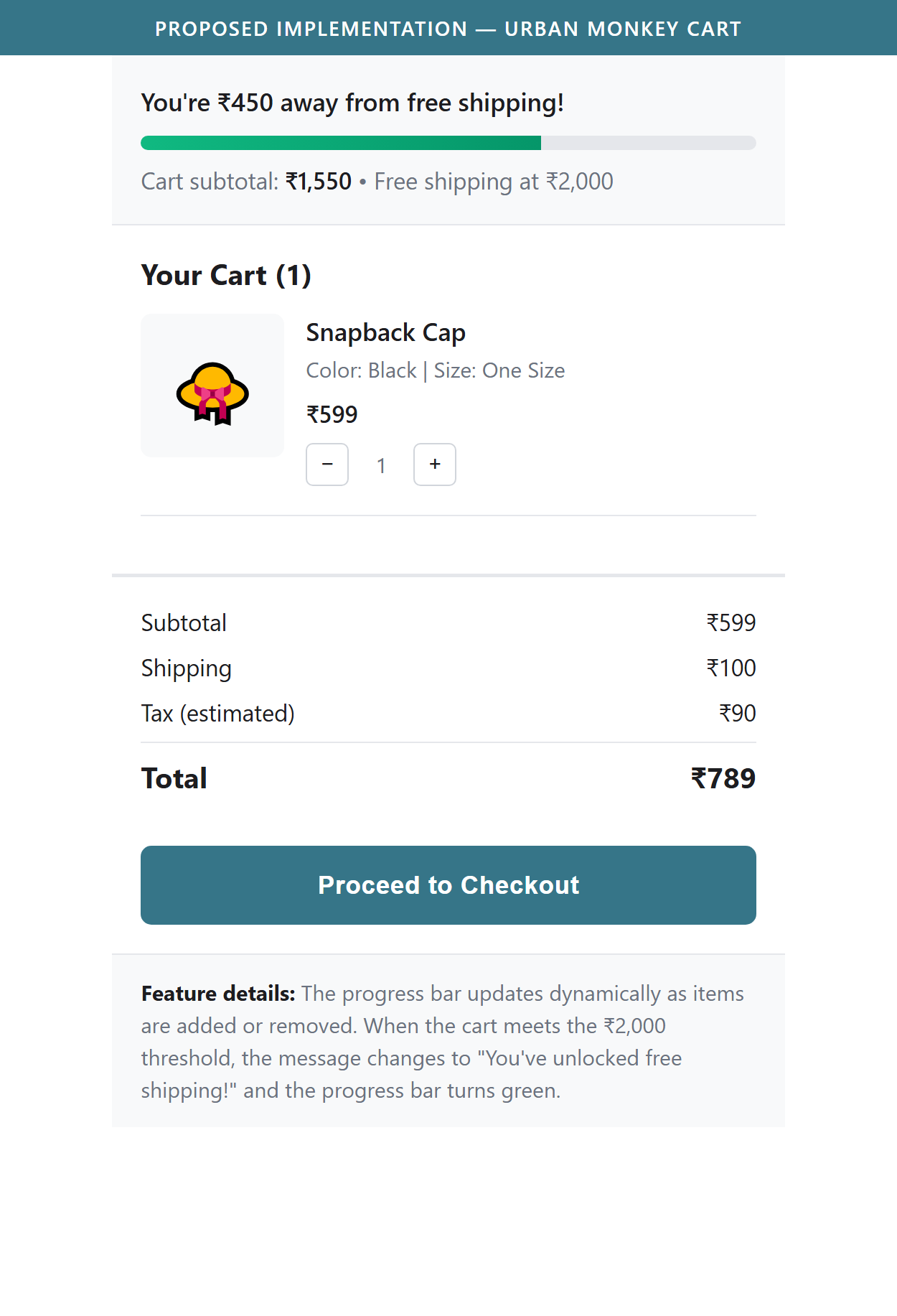
- Add a dynamic free shipping progress bar at the top of the cart (above the item list) that shows: 'You're ₹X away from free shipping' with a visual progress bar — the bar should update in real time as cart contents change.
- When a customer meets the free shipping threshold, replace the progress bar with a congratulatory message: 'You've unlocked free shipping!' — positive reinforcement for completing the threshold action.
- Pair the progress bar with a 'You might also like' section showing one or two products (typically accessories or lower-priced items) that would bring the order above the free shipping threshold — combining AOV incentive with cross-sell recommendation maximizes effectiveness.
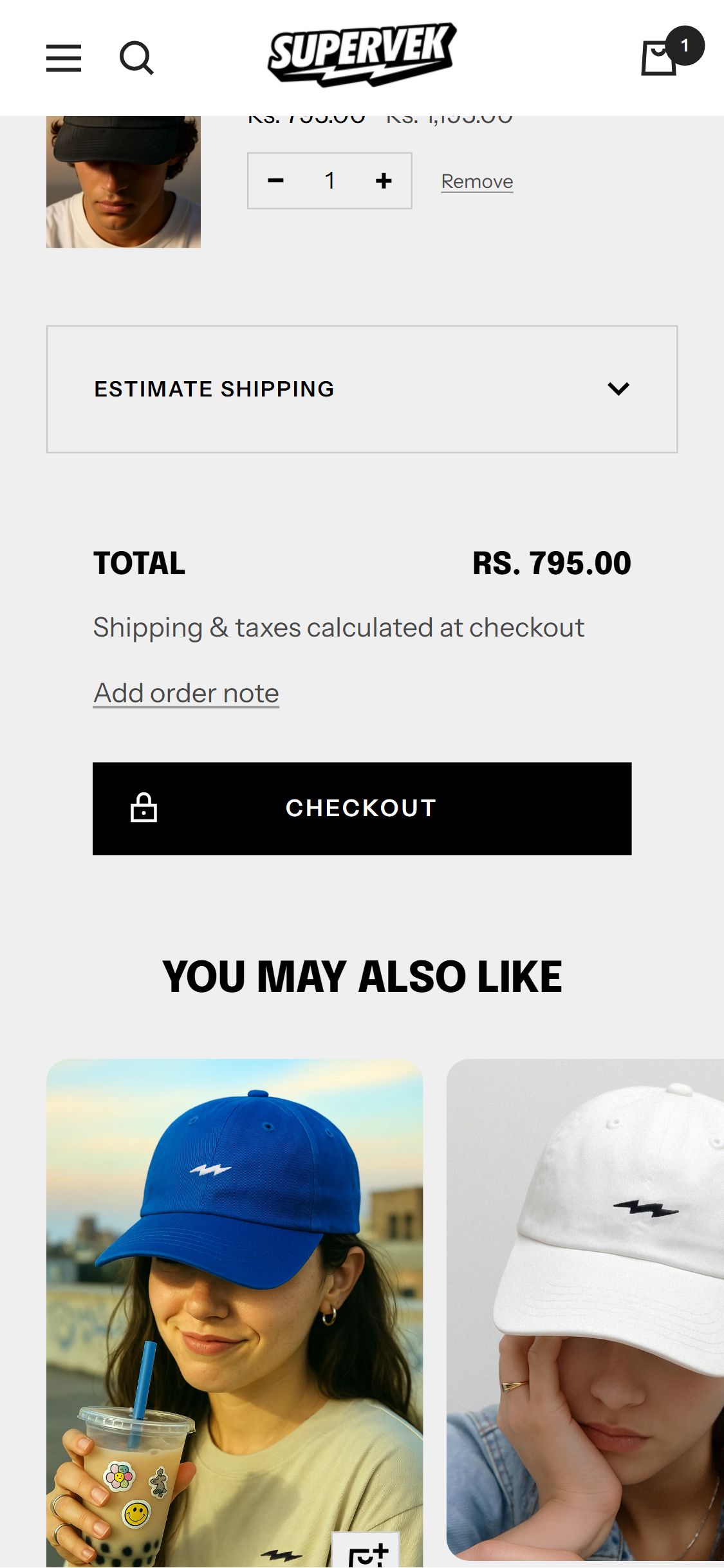
- Urban Monkey's cart page displays the added cart item(s) with quantity controls and a checkout button but contains no product recommendation section, cross-sell carousel, or 'Complete your look' module.
- Urban Monkey's multi-category catalog (caps, apparel, accessories, eyewear) provides natural cross-sell pairing opportunities — a buyer with a cap in cart is a prime candidate for a sunglasses or t-shirt recommendation.
- Standard benchmark: 7/10 top Indian fashion brands use cart cross-sell — Bewakoof shows 'You might also like' in-cart, The Souled Store surfaces frequently bought together accessories.
- The cart represents the highest buyer intent moment in the funnel — a customer who has committed to one product is significantly more receptive to an additional product recommendation than a user browsing the homepage.
- Add a 'Complete Your Look' or 'Add to Your Order' product section below the cart item list with 2–3 complementary product recommendations tailored to what's in the cart.
- For cap-only carts, recommend sunglasses, beanies, or apparel that pairs naturally — frame recommendations around the outfit/style completion narrative rather than generic 'Others also viewed' copy.
- Implement using a Shopify cross-sell app (Rebuy Smart Cart, LimeSpot, or Frequently Bought Together) or the Shopify Product Recommendations API — ensure recommendations are product-type-aware (cap in cart → accessories recommendation, not another cap).
Performance & Technology
Core Web Vitals, page-speed signals, and the technology stack powering Urban Monkey
Core Web Vitals
Technology Stack
Performance & Technology Assessment
Mobile performance is needs work (—/100); desktop is needs work (—/100) on Shopify. Page-speed and Core Web Vitals are increasingly load-bearing for SEO and conversion in this category — addressing the weakest vital first is the single highest-leverage technical improvement available.
Confidential — Prepared for Urban Monkey by Growisto | May 2026
App Ecosystem
What's installed vs what's missing from best-in-class Fashion stores
Present (6)
Missing (8)
App Stack Assessment
Urban Monkey has a functional foundational app stack appropriate for its brand stage — payments, email marketing, reviews, and social commerce are in place. The three highest-priority missing capabilities are: (1) Pincode delivery date estimator — Indian buyers need delivery visibility before committing, and this gap is directly costing PDP conversion; (2) Free shipping progress bar and cart cross-sell — the cart currently has zero AOV optimization mechanism despite Urban Monkey's multi-category catalog making cross-sell pairings (cap + sunglasses, cap + apparel) naturally available; (3) Back-in-stock notification for sold-out limited edition drops — Urban Monkey's drop culture creates high demand at launch but no mechanism to capture demand from buyers who arrive after a drop sells out. The size guide gap and product badges gap are theme-level fixes requiring minimal investment. The loyalty program is the highest-impact strategic addition for LTV — Urban Monkey's community of repeat cap collectors is the ideal loyalty program audience, and a points-based system with exclusive early drop access for top-tier members would strongly reinforce the brand's streetwear community positioning.
Confidential — Prepared for Urban Monkey by Growisto | May 2026